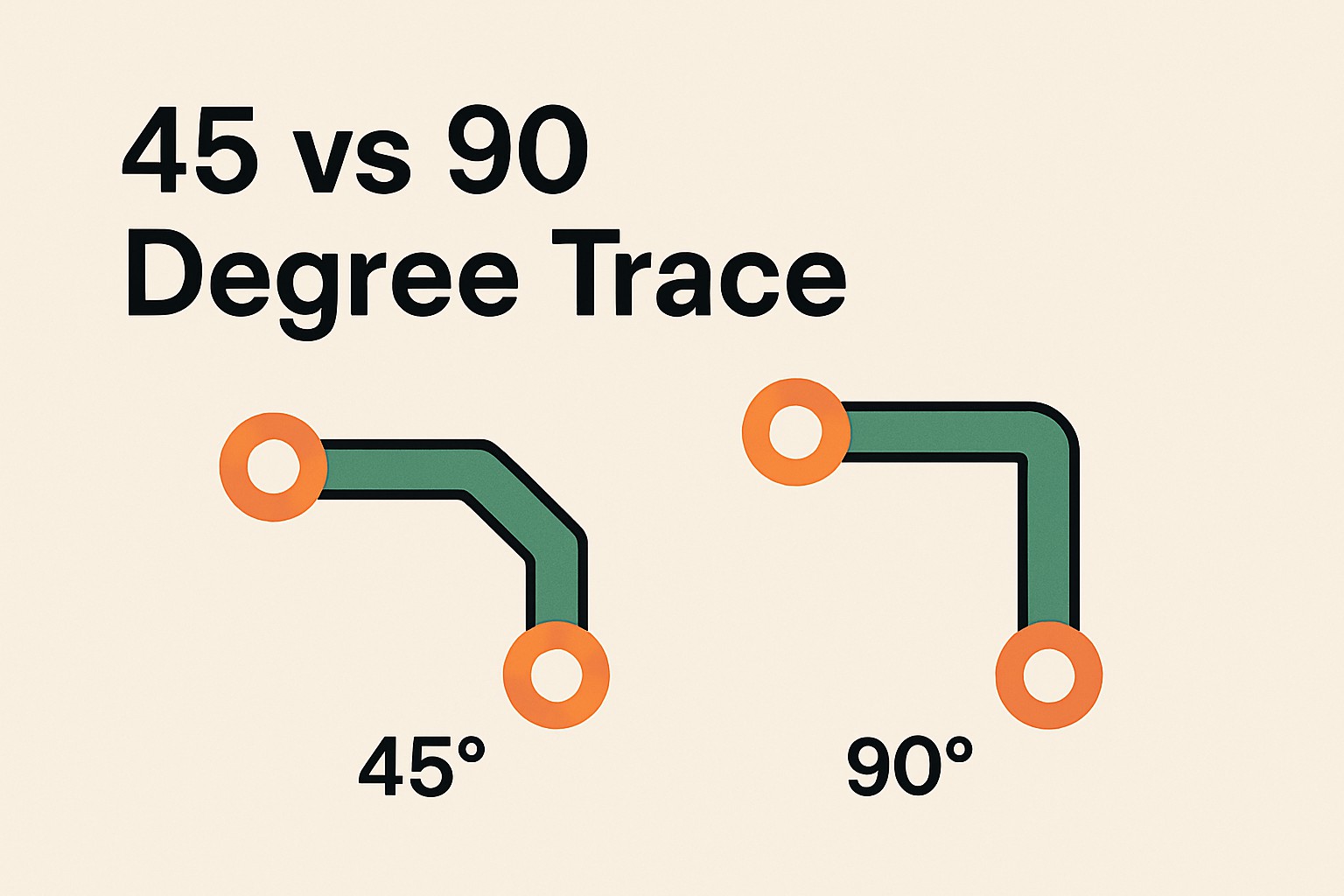
45 vs 90 degree trace - here we go again
This discussion pops up from time to time. Here is the TLDR. For low speed signals, it really doesn’t matter what you use. For high speed 45 angled traces are better than …
To build a successful product you must have a clear idea of what to build and how to plan for it. It all starts with writing down the requirements and specifications. …
Whether the wire or trace is 10mm long or a mile long the characteristic impedance remains the same provided there is no change in the geometry. Resistance increases as …
Here is a list of electronics and embedded related podcasts. I love listening to these. Its a great way of keeping yourself up to date with the evolving tech. Sometimes …
When you design a PCB, in most EDA tools the designators (R1,C4 U7, etc.) are placed on the silkscreen. Silkscreen layer is for information not data. Sometimes we are so …
When moving up from low speed design to high speed design, I saw engineers trying to length match USB 2.0 within 0.1mm or even closer to zero. Yes, zero skew is the best …
When you design a product and if you are not really sure if you need an extra capacitor for one of the IC or a module. You add it for extra measure and maybe it’s …
Today, I want to talk about two ICs with the same footprint and the same function, yet they may not work interchangeably. The ICs in this discussion are the hex buffer, …
It’s such a small thing to add and yet it’s forgotten. All PCB must have some way of mounting the board inside an enclosure. In cases where the PCB has …
The first thing you should do after importing the net list to your PCB design tool, is to define the rules. The rules definitions actually start at the schematic design …